
The continued development of online, hybrid and digitally enhanced forms of teaching has brought important opportunities for higher education, particularly in terms of access, flexibility and innovation. However, digital learning experiences may also reduce cognitive engagement, increase cognitive overload and limit learning.
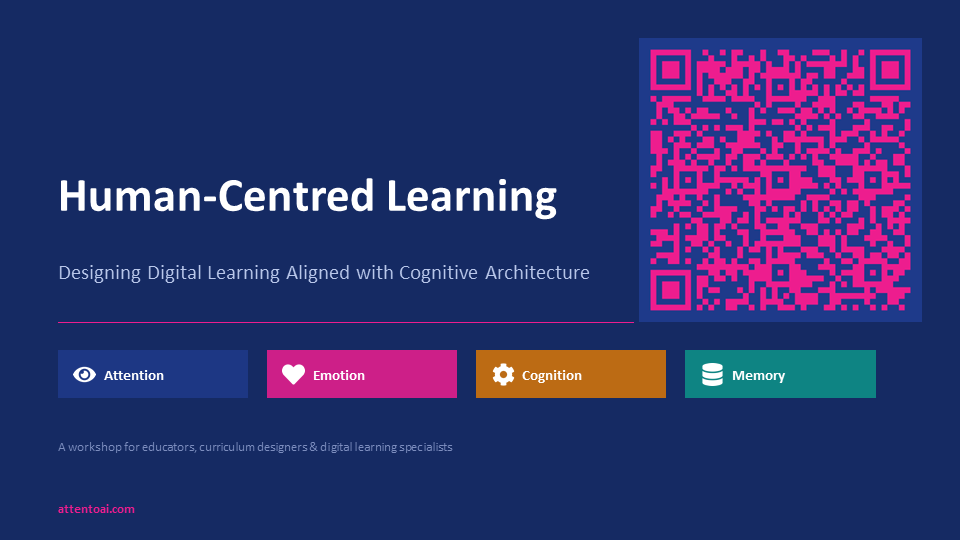
This neuroscience-based interactive workshop is designed for higher education staff: educators, curriculum designers, and digital learning specialists.
This session will focus on how to design for the way the human mind actually learns—using principles of human cognitive architecture to build better digital experiences. Participants will explore:
1. How the Brain Learns Digitally: Key insights from cognitive load theory, working memory limitations, motivation and schema construction. Methods of designing digital activities that respect and optimize these processes.
2. Improving Attention and Memory: Structuring online modules, multimedia, and asynchronous interactions to support attention management, encoding, and long-term retention.
3. Digital Tools for Measuring Attention and Engagement of Learners
Participants will bring one activity from their own course. They will identify where learners get overloaded or disengaged. They will then redesign that activity using a simple, step-by-step checklist.
Participants will leave with:
· a starter kit and clear checklist for designing brain-friendly digital lessons
· one improved activity ready to use in their own course
· a tool for assessing attention and engagement of learners with recommendations on improvements
The workshop supports the goals of Digital Week by strengthening educators’ digital pedagogical skills, promoting quality and effectiveness in digital education and advancing a human-centered perspective on digital transformation in higher education.